

Hydraulic cylinders and hydraulic rams are both essential components in hydraulic systems — yet they’re not exactly the same. Understanding how they work and what makes them different can help you maintain your machinery more effectively, choose the right replacement parts, and extend equipment life.
At Hydra-Line, our Ram Centre specialises in hydraulic cylinder refurbishment, testing, and manufacture, giving customers across the UK a reliable service for any type of cylinder or ram repair.
How Do Hydraulic Cylinders Work?
A hydraulic cylinder converts hydraulic energy into linear motion. It works by using pressurised oil to move a piston inside a sealed barrel. The system typically includes:
Cylinder barrel – a thick-walled, machined steel tube that holds the pressurised fluid.
Piston – fits tightly inside the barrel and separates it into two chambers:
The cap end (bottom chamber)
The rod end (piston rod side chamber)
Piston rod – extends out of the cylinder head and connects to the machine’s moving part.
Cylinder head and bottom (cap) – seal each end of the barrel.
Rod gland – prevents oil from leaking where the rod exits the cylinder.
When hydraulic oil is pumped into one side of the cylinder, it pushes the piston to move the rod, generating powerful force in one direction. Reversing the flow retracts the rod, completing the cycle.
Hydraulic cylinders are designed for controlled, repetitive movement — for example, lifting, pressing, or clamping — and are found in everything from excavators and forklifts to industrial presses and agricultural machinery.
What Are Hydraulic Rams?
A hydraulic ram is technically a type of hydraulic cylinder — but it’s specifically designed for high-force, short-stroke applications. Rams are built to push or pull extremely heavy loads over a limited distance, such as in:
Hydraulic presses
Agricultural equipment
Construction machinery
Industrial lifting systems
Rams typically feature a larger bore size compared to the stroke length, allowing them to generate immense pressure for heavy-duty applications.
How Do Hydraulic Rams Work?
A hydraulic ram operates similarly to a standard cylinder but with key design differences:
Full-Bore Side: The area between the piston and the end cap.
Annular Side: The area between the piston and the gland (rod side).
When hydraulic fluid is pumped into the Full-Bore Side, the piston extends the rod, delivering high force.
Reversing the flow sends oil into the Annular Side, retracting the rod and returning fluid to the tank.
This configuration gives rams their exceptional power density, making them perfect for demanding applications where brute strength and reliability are vital.
Cylinder vs. Ram — What’s the Real Difference?
FeatureHydraulic CylinderHydraulic RamPrimary FunctionLinear motion over distanceHigh force over short strokeCommon UsesLifting, pressing, steering, clampingJacks, presses, heavy liftingConstructionTwo active chambersUsually single-actingStroke LengthLongShortForce OutputModerateExtremely high
Simply put — all rams are cylinders, but not all cylinders are rams.
If your machinery relies on heavy lifting or powerful extension in limited movement (like a tipping trailer or hydraulic press), you’re likely using a ram. If it needs smooth, precise control over longer distances (like steering or boom movement), it’s a cylinder.
Hydraulic Cylinder & Ram Services by Hydra-Line
At our Hydra-Line Ram Centre, we provide complete hydraulic cylinder and ram solutions across the UK:
Hydraulic cylinder refurbishment and resealing
Custom cylinder manufacture to original or upgraded specs
Hydraulic ram testing and certification
On-site inspection and collection service
Fast turnaround for construction, agricultural, and industrial equipment
All rams and cylinders are tested in-house using our state-of-the-art pressure testing facility and supplied with full documentation for compliance and traceability.
When to Service or Re-Seal a Hydraulic Cylinder
Visible oil leaks around the gland or seals
Slow or uneven movement under load
Scored or corroded rods
Reduced lifting power
Excessive heat in the hydraulic system
Ignoring early warning signs can lead to catastrophic failure and expensive downtime.
Hydra-Line can inspect, reseal, or rebuild your cylinder or ram, restoring full performance at a fraction of the replacement cost.
Need a Cylinder or Ram Refurbished?
Hydra-Line’s Ram Centre handles everything from small agricultural rams to large industrial cylinders.
✅ Nationwide collection & delivery
✅ Pressure-tested, guaranteed repairs
✅ Fast turnaround, minimal downtime
📞 Call Hydra-Line today or visit our Ram Centre page to book your hydraulic cylinder inspection or rebuild.
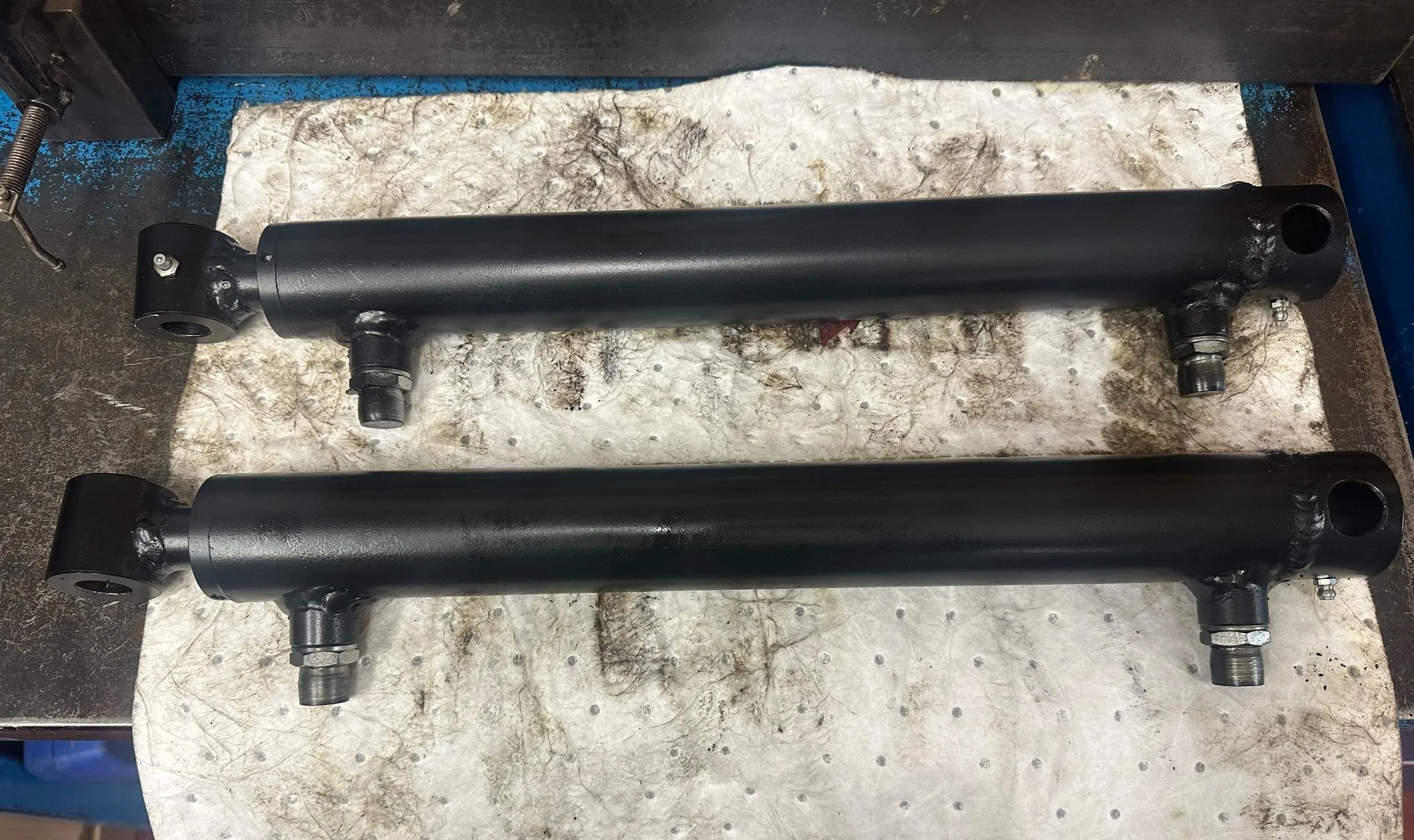
2 hydraulic cylinders manufactured by us in Stoke-on-Trent